

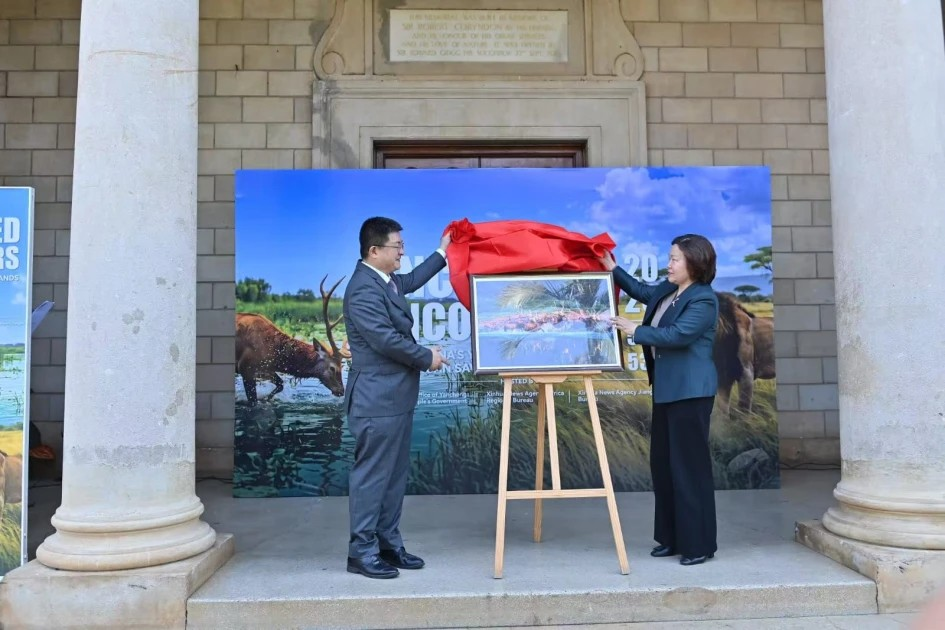
Conservationists from Kenya and China are actively seeking innovative ways to implement technology that protects biodiversity.
At the recently concluded China-Africa Biodiversity Conservation Exchange and Training Course and the “Eagle City” Global Exhibition, experts highlighted how real-time animal tracking has significantly enhanced the protection of wildlife, safeguarded migratory routes, and minimized human-wildlife conflicts.
Researchers from the Kenya Wildlife Service (KWS) have equipped lions in the Maasai Mara with GPS collars, enabling real-time monitoring of their movements. This technology allows local communities to receive timely warnings when lion prides approach human settlements, thereby reducing livestock losses and preventing retaliatory killings. Such measures foster harmonious coexistence between humans and wildlife.
Stephen Kenta, a Rhino and Cheetah Expert at the Mara National Reserve, shared insights on technology-driven rhino conservation practices. Kenya has established a smart conservation command center where rhinos wear geo-tagged ear tags that automatically alert the system when they near reserve boundaries. Additionally, infrared cameras assist in documenting the population of wild rhinos.
Deputy Director-General Liu Ming from the Chongqing Municipal Ecology and Environment Bureau showcased Chongqing’s advancements in urban biodiversity governance, migratory raptor conservation, and public engagement. He emphasized the success of a 10-year fishing ban along the Yangtze River, alongside systematic species surveys and habitat restoration efforts. As a result, the region now supports nearly 6,000 wild vascular plant species, over 800 terrestrial vertebrate species, more than 180 river fish species, and numerous nationally protected rare plants and animals. Liu called for strong exchanges among participants to explore conservation pathways tailored to the unique realities of each nation.
Zakayo Lairumbe Kipuyo, Founder of the Joy and Hope for Rural Community Foundation, presented conservation initiatives from Arusha. Under community stewardship, the organization promotes forest restoration, wildlife migration corridor maintenance, and water source protection while developing eco-friendly alternative livelihoods to enhance ecological restoration efforts.
Eston Murithim, Chairman of the Adept Conservation Network, discussed how his organization safeguards forest, river, and wetland ecosystems by harnessing local community strengths. Through skills training, community patrols, seedling cultivation, ecological restoration, and science outreach, the project effectively mitigates human-wildlife conflict and promotes coexistence between people and wildlife.
In parallel with the main event, themed China-Africa youth biodiversity conservation courses were launched. These courses integrate ecological practices from both regions and employ engaging formats such as videos and board games, enabling young people to grasp conservation concepts through trade-off thinking and collaborative problem-solving. Comprehensive course materials and teaching toolkits have been distributed to African non-profits, schools, and local communities.
Selected as a flagship program for the 2026 China-Africa Year of People-to-People and Cultural Exchanges, this event serves as a vital bridge, fostering deeper ties and green cooperation between China and Africa. It attracted representatives from ecological authorities, protected-area management bodies, non-profit organizations, and universities from Chongqing, Kenya, and Tanzania.