

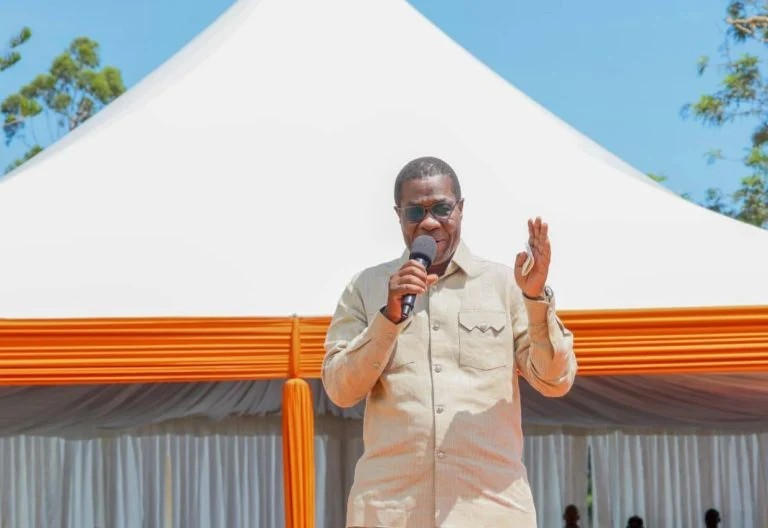
The Ministry of Energy and Petroleum has initiated a robust campaign against illegal liquefied petroleum gas (LPG) dealers and unauthorized cylinder refilling cartels.
Energy Cabinet Secretary Opiyo Wandayi emphasized that enforcement agencies will actively pursue traders who operate outside the law, prioritizing public safety above all.
He affirmed that the government will remain steadfast against political pressure and will not allow illegal LPG trade cartels to compromise efforts to regulate the sector effectively.
Wandayi addressed allegations from former Deputy President Rigathi Gachagua, who criticized the government’s management of seized LPG cylinders and questioned the conduct of officials at the Energy and Petroleum Regulatory Authority (EPRA).
The CS characterized these allegations as baseless but acknowledged the government’s commitment to addressing consumer safety concerns raised by these issues.
“Ensuring LPG safety is our top priority for consumers. Our crackdown is grounded in the LPG National Growth Strategy, approved by the Cabinet in October 2023, which aims to enhance the use of LPG as Kenya transitions from biomass fuels,” Wandayi stated.
He highlighted that a key component of this strategy involves regulatory reforms designed to combat illegal refilling and illicit LPG trade, which pose significant risks to public safety.
“The regulations mandate that LPG businesses acquire necessary licenses and adhere to license conditions. They also enhance the identification and traceability of cylinders and restrict refilling and trading activities to authorized entities,” the CS explained.
The 2025 regulations introduce a centralized LPG cylinder tracking system to monitor cylinder purchases and sales, thereby enhancing accountability throughout the supply chain.
Each filled cylinder must now display a serial number paired with an authority-issued seal number to confirm its authenticity.
Wandayi refuted claims that a contract had already been awarded for the operation of the cylinder tracking system, clarifying that procurement will follow the Public Procurement and Asset Disposal Act and relevant laws, and the process is still ongoing.
Additionally, the new regulations require businesses within the LPG cylinder supply chain to maintain detailed records to assist regulators in tracing cylinders and transactions.
Wandayi disclosed that EPRA is collaborating with the National Police Service and the Directorate of Criminal Investigations to enforce compliance and address illegal operations.
“When authorities seize illegally refilled cylinders, they must document these items and provide affected operators an opportunity to respond before any legal or administrative actions are initiated,” the CS noted.
He further cautioned businesses engaged in illegal refilling that enforcement operations would intensify.
“We will pursue you relentlessly in the interest of public safety; this crackdown will continue until we achieve full compliance,” Wandayi asserted.
The government’s strengthened approach responds to previous incidents of fires associated with illegally traded or mishandled gas cylinders, highlighting the significant safety risks of an unregulated LPG market.


