

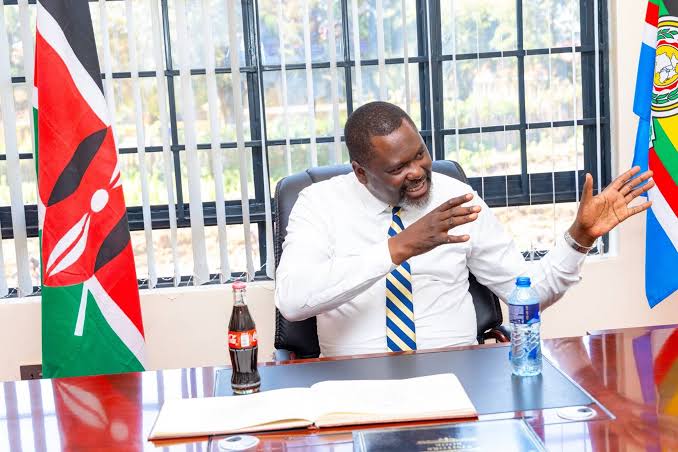
Starting August 1, 2026, thousands of civil servants will receive higher salaries, following the government’s decision to delay the public sector pay review by one month.
Public Service Cabinet Secretary Geoffrey Ruku announced that the anticipated salary increase, originally set for July 1, will now take effect at the beginning of August. This review will benefit public servants nationwide and includes significant increases in essential allowances.
During a recent address in Londiani, Kericho County, Ruku emphasized the government’s dedication to enhancing the welfare of public servants through this salary review, as directed by President William Ruto.
“The government assures you that by the end of July, there will be a salary increase. We will enhance gross pay, housing allowance, and commuter allowance so that all civil servants in Kenya can enjoy improved salaries and allowances,” Ruku stated.
Comprehensive Salary Review
The Cabinet Secretary highlighted that the salary review extends beyond basic salaries. Civil servants will also see increased housing and commuter allowances, which will elevate their overall monthly earnings.
Although the timeline has shifted from the announcement made during the Public Service Week celebrations at the Kenyatta International Convention Centre (KICC) on June 23, the government remains committed to the salary review process.
This decision aligns with a prior government announcement from January under the Fourth Remuneration and Benefits Review Cycle (2025-2029), which was retroactively set to July 2025.
Ruku also pointed out that this salary review is part of a broader initiative to improve public servants’ welfare while enhancing accountability within the public service.
Anticipated Salary Increases
While the government has not yet released final salary scales for each job group, previous communications indicated that civil servants will see increases in both basic salaries and allowances, leading to higher gross and net monthly pay.
Estimates suggest that monthly take-home pay could rise between Ksh1,000 and Ksh55,364, depending on job group and allowance structure. Here are some expected adjustments:
Entry-level officers: Basic salary projected to rise from Ksh21,700 to Ksh28,690.
Job Group K: Basic pay expected to increase by about Ksh1,800.
Job Group L: Anticipated increase of about Ksh1,900, bringing basic pay to around Ksh68,000.
Job Group N: Projected increase of approximately Ksh7,000, raising basic salary to about Ksh103,000.
Job Group P: Expected increase of about Ksh9,000, with salaries rising to roughly Ksh142,000.
Job Group R: Anticipated increase of about Ksh2,800, taking basic pay to around Ksh185,000.
3 years
Job Group S: Expected increase of about Ksh25,700, lifting salaries to approximately Ksh292,000.
Job Group T: Anticipated increase of about Ksh30,000, pushing top basic salaries to around Ksh396,000, with specialized positions earning up to Ksh451,494.
The review will also enhance housing and commuter allowances, while some National Government Administration Officers (NGAO), including chiefs and assistant chiefs, will continue to receive specialized risk allowances.
Broad Beneficiaries of the Salary Increase
This salary increase will positively impact employees across the public service, including those in ministries, state departments, state corporations, county governments, and teachers employed by the Teachers Service Commission (TSC). While the government has not announced a separate salary review specifically for TSC teachers, those covered under the broader public service review are expected to benefit once the new pay structures are implemented.
According to the Salaries and Remuneration Commission (SRC), Kenya’s public service employs over one million workers, with approximately 124,000 serving on permanent and pensionable terms within the national public service.
Payroll Migration Directive
In addition to confirming the salary increase, Ruku reiterated the necessity for all government institutions to migrate their payrolls to the Government Human Resource Information System (HRIS).
This directive mandates that all ministries, departments, state agencies, and county governments complete the migration within one month. Institutions that fail to comply risk having their salary payments withheld.
“We have issued a circular stating that all ministries, departments, and county governments must onboard the HRIS within one month. Failure to do so will result in withheld salaries,” Ruku warned.
This system will enhance accountability in payroll management and help eliminate ghost workers who drain public funds. Following a payroll audit that identified irregularities, the government asserts that the new platform will facilitate real-time monitoring of payroll activities across both national and county governments.
“We will monitor all activities in the system in real time. Any manipulation will be detectable from our end,” Ruku stated.
The Cabinet Secretary emphasized that it is crucial for all public institutions to integrate into the unified payroll platform to ensure that only verified employees receive government salaries and allowances, including the anticipated August 1 salary increase for civil servants.
The government believes these reforms will bolster transparency, improve payroll management, and ensure public funds are allocated only to genuine employees.
For thousands of civil servants, teachers, county government employees, and other public servants, the focus now shifts to August 1, when the revised salaries and improved allowances are set to start appearing in their monthly pay.


