

Financial professionals advocate for the government to reconsider allocating billions of shillings to ministries and counties that lack the capacity to effectively utilize these funds. This practice leads to wasteful supplementary budgets, hampers development projects, and diminishes value for taxpayers, experts emphasize.
During a post-budget public finance discussion hosted by the Institute of Certified Public Accountants of Kenya, the Office of the Controller of Budget highlighted the importance of aligning public spending plans not only with available resources but also with the capability of government agencies to implement projects within the financial year.
“If we recognize that a ministry cannot absorb the funds, we should refrain from allocating them. Ministries often receive substantial amounts but end up spending only a fraction before requesting reallocations through supplementary budgets,” stated Cyrus Ondari, Deputy Director of Research and Planning in the Office of the Controller of Budget.
The forum revealed that weak procurement systems, delays in implementation, and inadequate project planning hinder budget absorption, especially for development expenditures. As a result, billions of shillings remain unutilized while vital infrastructure and public service projects stagnate.
For example, a review of the latest Controller of Budget report for the nine-month period ending March 2026 indicates that five counties—Bomet, Kericho, Laikipia, Nairobi City, and Nandi—failed to return unspent balances from the 2024-25 financial year to their County Revenue Fund (CRF) accounts, as mandated by Section 136 of the Public Finance Management (PFM) Act, 2012. Instead, these unspent funds were carried over into the following financial year.
“We actively monitor how national and county governments utilize allocated resources to ensure they lead to effective service delivery,” Ondari added.
This warning comes as Kenya gears up for another budget cycle, facing increasing pressure to balance growing debt obligations, rising recurrent expenditures, and ambitious revenue targets.
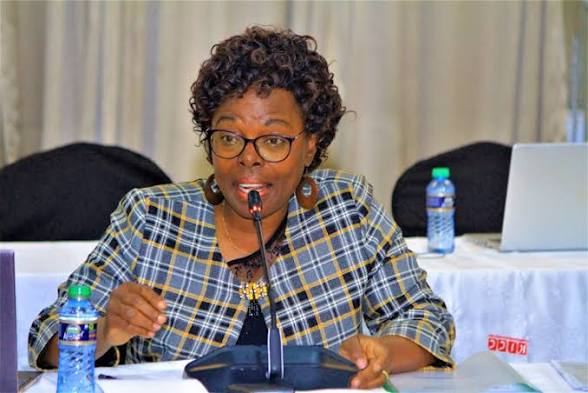
Grace Kamau, CEO of ICPAK, pointed out that the nation’s spending priorities heavily favor recurrent expenditures, leaving insufficient resources for investments that promote long-term economic growth. She noted that out of the approximately Sh4.8 trillion national budget, more than three-quarters is committed to recurrent expenditures and debt servicing, significantly constraining the government’s ability to finance productive development programs.
Kamau highlighted that nearly Sh2 trillion is allocated to recurrent expenditures, while another Sh1.5 trillion is designated for debt repayment, leaving a relatively small portion for development projects. “As we enter the next planning cycle, we must shift our focus towards reducing recurrent expenditures and prioritizing development,” she emphasized.
She argued that increased investment in infrastructure, productive sectors, and other development initiatives would stimulate stronger economic activity, broaden the tax base, and ultimately enhance government revenues.
Development spending faces mounting pressure as Kenya grapples with rising public debt servicing costs, compelling a growing share of tax revenues to fund salaries, operational costs, and debt repayments, rather than capital investments.
Experts also expressed doubts about the government’s ambitious tax collection targets in the current economic climate. The National Treasury aims to generate approximately Sh3 trillion in ordinary tax revenue, along with additional collections from appropriations-in-aid, to finance government spending.
However, Kamau cautioned that unrealistic revenue assumptions could lead to larger fiscal deficits when expenditure commitments proceed despite underwhelming revenue collections. “We aim to raise Sh3 trillion from taxes, but how realistic is this? Are we genuinely expecting to collect that amount?” she questioned.
She warned that governments often commit to expenditures based on optimistic revenue forecasts, only to turn to increased borrowing or larger budget deficits when collections fall short.
The discussion also spotlighted concerns over the quality of public expenditure, with experts questioning whether taxpayers receive value for their money in government procurement. Robert Waruiru, Convener of the Public Finance and Tax Committee at ICPAK, argued that mere compliance with procurement procedures should not be the sole measure of accountability if public institutions consistently purchase goods and services at prices significantly above market rates.
“There’s a saying: as long as the procurement process is followed, value for money becomes secondary,” Waruiru stated. He challenged oversight institutions to scrutinize government spending more rigorously, questioning why basic household items often cost several times more when procured by public entities. “Why does a tissue paper cost Sh200 when I can buy it for Sh30 or Sh50 at a store?” he asked.
The panel called for enhanced oversight from Parliament, the Office of the Auditor-General, the Controller of Budget, professional bodies, and citizens to ensure that public resources yield measurable results. They also advocated for realistic budgeting at both national and county levels, warning that inflated revenue projections often create funding shortfalls that contribute to pending bills and stalled projects.


