

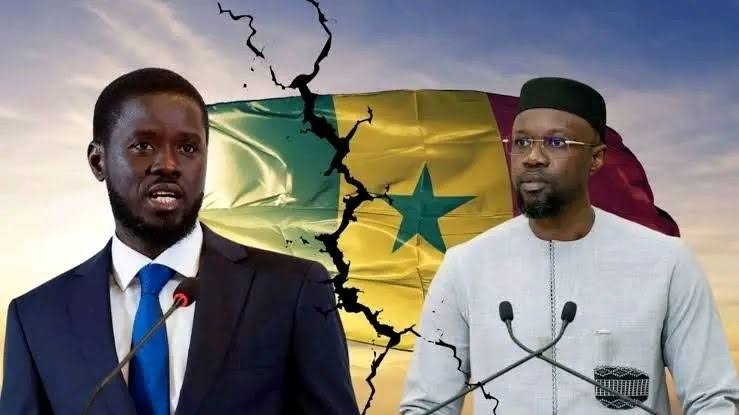
On Friday, Senegal’s President Bassirou Diomaye Faye dismissed Prime Minister Ousmane Sonko and dissolved the government, increasing uncertainty in a nation already facing a debt crisis and ongoing negotiations with the International Monetary Fund (IMF).
A state media statement confirmed the dismissal of all ministers, with the outgoing government responsible for daily operations, according to Oumar Samba Ba, the presidency’s secretary-general.
This decision follows months of rising tensions between the former allies. Sonko, a charismatic leader with significant youth support, had previously endorsed Faye for the 2024 election after being barred from running due to a defamation conviction.
After the announcement, Sonko expressed on social media his relief, stating, “Tonight I will sleep with a light heart in the Keur Gorgui neighbourhood,” referring to his home.
The split occurs amid increasing economic pressure. The IMF suspended its $1.8 billion lending program to Senegal after discovering misreported debt, projecting the country’s debt to reach 132% of its economic output by the end of 2024.
Faye’s actions may delay negotiations for a new agreement with the IMF, which is crucial for economic recovery.
Prior to Sonko’s dismissal, Finance Minister Cheikh Diba informed parliament that Senegal anticipates resuming IMF talks the week of June 8, aiming to reach consensus on key issues by June 30.
Diba cautioned that the fuel subsidy costs could exceed the 2026 budget by up to 1.15 trillion CFA francs ($2 billion) if oil prices rise to $115 per barrel, noting that Sonko had declined his proposal to increase fuel prices.
Sonko opposed any debt restructuring, estimated at $13 billion, which he attributed to the IMF’s recommendations, while Faye has remained less vocal on the subject.
Speculation surrounds Sonko’s political future. He served as a popular opposition leader under former President Macky Sall, whose decision to delay the 2024 election led to unrest.
Both Faye and Sonko, former tax officials, faced imprisonment ahead of the 2024 election but were released just ten days before the rescheduled vote, which Faye won with 54%.
Afterward, Faye appointed Sonko as prime minister. With Sonko’s dismissal, his next steps remain uncertain.
In March, Sonko indicated he might withdraw his Pastef party from the government and return to opposition if Faye deviated from their agenda, suggesting an ongoing power struggle between them.
Pastef holds significant influence in the National Assembly, which could complicate governance and the implementation of reforms necessary for IMF support.
Last month, lawmakers passed electoral code changes that might enable Sonko to run for president in 2029.
Among the prime minister’s key initiatives was an audit of Senegal’s resource agreements, particularly in the emerging oil and gas sectors.
In March, Sonko criticized a BP gas contract for the Greater Tortue Ahmeyim project as unfair and revoked 71 mining licenses, arguing that renegotiating these contracts could reduce domestic energy prices and help stabilize Senegal’s finances.


