

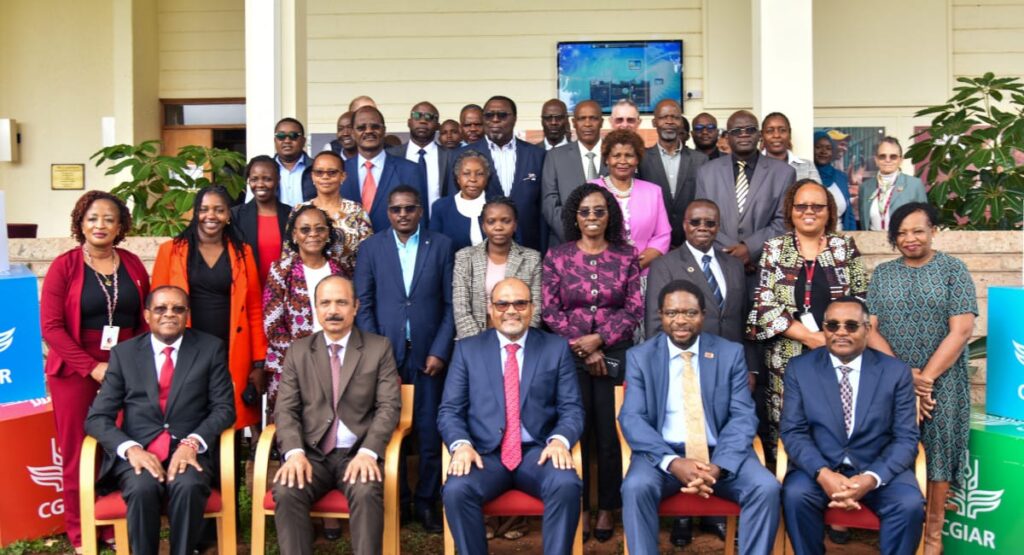
Kenya has inaugurated the World Agriculture Forum (WAF) Country Council to expedite the transformation of its agricultural sector. This initiative aims to enhance productivity, bolster climate resilience, and connect global innovations with local farming practices.
The council’s establishment represents a pivotal step in positioning Kenya as a leader in agricultural innovation across the continent, particularly in artificial intelligence (AI) and bioengineering.
During the launch, Science, Research and Innovation Principal Secretary Prof. Abdulrazak Shaukat emphasized the urgent need to improve both the quality and quantity of agricultural production. He highlighted that climate change disrupts planting seasons and trade barriers hinder supply chains, while a growing population intensifies food demand, adding pressure to the sector.
“These challenges necessitate innovative, science-driven solutions to create a more resilient and productive agricultural system,” he stated.
Shaukat noted that the WAF Kenya Country Council will bridge the gap between policy goals and practical farming realities, establishing integrated investment pipelines that combine digital intelligence with biological innovation. He affirmed Kenya’s readiness to lead the “convergence decade,” stating, “The future lies in the synergy between digital and biological intelligence. AI advises farmers on planting times, while bioengineering provides resilient seeds.”
This initiative aligns with Kenya’s Bottom-Up Economic Transformation Agenda (BETA), the AI Strategy 2025–2030, and continental frameworks like CAADP and Agenda 2063, focusing on measurable outcomes such as increased yields, improved farmer incomes, and socio-economic transformation.
WAF Global Executive Director Dr. M J Khan conveyed that the forum will act as a catalyst for revolutionizing global food systems. “WAF is committed to thought leadership and addressing challenges like trade barriers and climate change. Data is the new fertilizer, and we aim to utilize it to create smarter, more resilient agricultural systems,” he remarked.
The WAF platform will implement its mission through flagship initiatives, including the Global Soil Health Coalition, Global Digital Agriculture Council, Global Sustainability Council, and the Trade and Food Security Council.
International Livestock Research Institute Director General Prof. Appolinaire Djikeng underscored the significance of sustained collaboration in transforming agriculture. “This partnership reflects over a year of joint efforts between WAF and ILRI, aimed at enhancing food security and reducing poverty,” he stated. “The launch of the Kenya Country Council strengthens our commitment to translating science and innovation into tangible benefits for farmers.”
WAF Kenya Country Director Oscar Magenya added, “The launch signifies a transition from dialogue to action, uniting government, investors, and researchers to deliver effective solutions for farmers.” He emphasized that this council is a mechanism to translate global best practices into local impacts, enhancing productivity and farmer incomes while building a resilient, technology-driven food system.
The event also highlighted insights from industry leaders on how digital tools and innovations are transforming agriculture. Market Farm Ltd CEO Timothy Wanjohi stressed the role of technology in improving farmer outcomes, stating, “We witness how digital platforms, AI-driven advisories, and solar solutions reduce post-harvest losses and enhance market access.”
He called for scaling these solutions to ensure they reach every farmer in need. The WAF Kenya Country Council will prioritize building integrated pipelines for agricultural innovation, fostering public-private partnerships, and engaging county governments as key implementation drivers.
By 2028, the council aims to establish a scalable model connecting global investors with local agricultural innovations, accelerating the adoption of AI and bioengineering solutions, and strengthening Kenya’s position as an agri-tech hub.
The inaugural county council meeting will take place within 30 days to form technical working groups focused on aligning regulations, developing financing models, and creating safeguards for farmers while simplifying AI usage.