

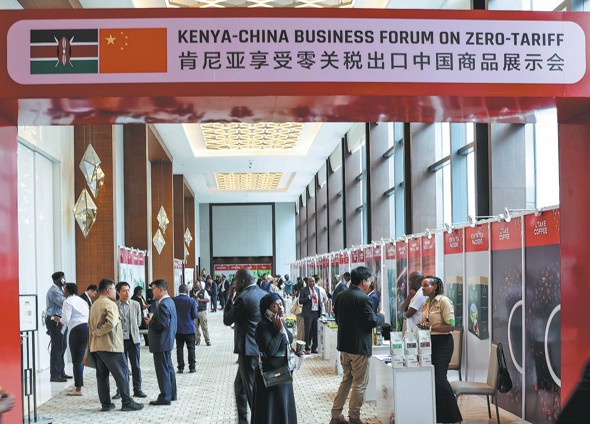
When Kenya and China launched their first shipment of goods from Nairobi, it represented more than just cargo movement; it signaled a pivotal opportunity for Kenya to enter a previously inaccessible market.
Historically, Kenya’s trade with China has faced significant imbalance, with imports far outpacing exports. In 2024, Kenya exported only $0.21 billion worth of goods to China, while imports soared to $4.32 billion, resulting in a trade deficit of approximately $4 billion. This context underscores the significance of the new zero-tariff arrangement.
The initial consignment of fruits, vegetables, and minerals, flagged off at the Standard Gauge Railway Nairobi Terminus, marked a potential turning point. Deputy President Kithure Kindiki emphasized that this initiative symbolizes a new phase in Kenya-China cooperation, aimed at boosting exports and creating opportunities for local farmers and entrepreneurs.
Access to the Chinese market has long been a hurdle. With a population exceeding 1.4 billion, China presents a vast and complex market that is increasingly open to imports. At the eighth China International Import Expo last year, Prime Minister Li Qiang highlighted the event as a vital link between China and global markets, showcasing participation from over 150 countries.
For Kenya, the question is not about the existence of the market, but rather its readiness to capitalize on it. The zero-tariff policy significantly reduces export costs, enhancing the competitiveness of Kenyan goods in China and providing access to a market that was previously challenging to penetrate.
However, mere access does not ensure success. My experience in China revealed that the market demands consistency, quality, and a deep understanding of consumer expectations. Chinese consumers seek value and reliability.
With the current geopolitical tensions in the Middle East, diversifying exports toward China becomes crucial for Kenya. The uncertainty in that region makes this shift not only attractive but necessary. In 2024, China’s imports from Africa rose to approximately $87 billion, reflecting a strategic focus on expanding market access.
China’s recent announcement of zero-tariff treatment for 53 African nations highlights a broader commitment to opening its market. For Kenya, this moment transcends traditional exports like tea and coffee; it necessitates a reevaluation of its export landscape.
Kenya boasts exceptional coffee, is the largest avocado producer in Africa, and ranks as the second-largest exporter of macadamia nuts. The focus should now be on enhancing these strengths and adapting them for an evolving market.
Beyond agriculture, sectors such as manufacturing, agro-processing, digital trade, and renewable energy present additional opportunities for engagement with China. Yet, potential alone does not guarantee progress. Without concerted efforts from the government and industry, the zero-tariff opportunity may go underutilized.
A robust support system is essential to help exporters navigate standards and certification, scale production, and strengthen trade linkages. Increased awareness is vital to overcome the structural challenges that have historically limited Kenya’s export capacity.
China’s Vice President Han Zheng noted the growing relationship between the two nations, indicating a shift from infrastructure-focused engagement to trade-oriented cooperation. For Kenya, this shift comes at a crucial time as the country seeks new economic avenues.
While the zero-tariff arrangement won’t resolve all challenges, it offers Kenya a significant chance to engage meaningfully in one of the world’s largest markets. The successful launch of that first consignment is merely a beginning; the real test lies in what follows.


