

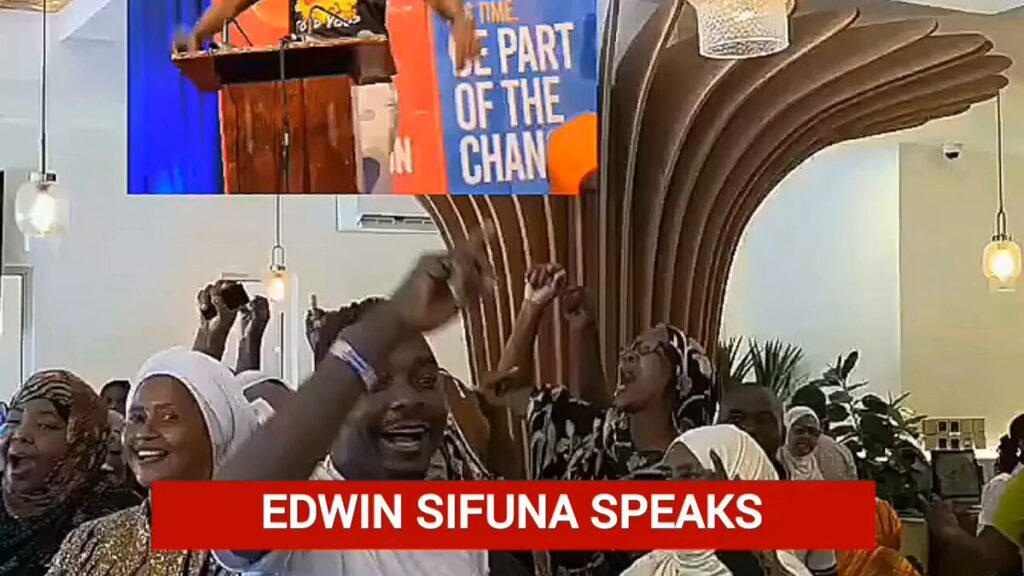
“Amezaliwa, Sifuna Mkombozi” becomes a rallying cry among supporters as the catchy chant sweeps across TikTok and other online platforms.
In recent days, a new chant has swept across Kenyan social media platforms, particularly TikTok, where it has been embraced as an anthem for Nairobi Senator Edwin Sifuna, transforming the veteran opposition figure into an unlikely viral sensation.
The refrain, “Amezaliwa, Sifuna Mkombozi,” loosely translated as “He is born, Sifuna the Liberator,” has become a rallying call among supporters and online communities, spreading rapidly across digital spaces and sparking conversations about the intersection of politics, youth culture, and social media virality.
The anthem first appeared in short TikTok clips, accompanied by dance routines, celebratory captions, and enthusiastic participants waving makeshift flags or gesturing in synchronized movements. Within hours, it began trending across Nairobi and Mombasa, with users reposting the chant, creating their own versions, and labeling it “Sifuna’s anthem” as the hashtag gained momentum.
Comments under the videos consistently refer to him as mkombozi, a term that carries deep cultural weight in the Kenyan context. The word, derived from Kiswahili roots meaning “to redeem” or “to liberate,” is often reserved for figures seen as redeemers, deliverers, or agents of profound change. Its application to Sifuna marks a significant shift in public perception, elevating the outspoken senator from a familiar political personality to a symbol with broader cultural resonance.
What makes the anthem remarkable is not only its catchy rhythm and the creativity of the content it has inspired but also its symbolic meaning. In a political landscape often dominated by formal rallies, press statements, and traditional campaign strategies, the spontaneous emergence of a viral chant represents a new frontier of political engagement, driven largely by young Kenyans who have found in Sifuna a figure they identify with.
Sifuna, who serves as the Secretary General of the Orange Democratic Movement (ODM), has long been known for his sharp wit, unyielding criticism of the government, and a social media presence that sets him apart from many of his peers in the political class. His willingness to engage directly with citizens on digital platforms, often responding to critics with humor and candor, has earned him a loyal following, particularly among younger demographics.
The viral anthem, however, appears to have transcended his existing base, capturing the imagination of a broader audience that may not be deeply invested in traditional party politics but is drawn to the cultural moment the chant represents. TikTok users, content creators, and even some mainstream personalities have joined the trend, contributing to its rapid spread.
Political analysts have noted that the phenomenon reflects the growing power of digital platforms in shaping political narratives in Kenya. Unlike previous eras when political messaging was tightly controlled by party machinery and mainstream media, the current landscape allows for organic, grassroots-driven movements to emerge seemingly overnight.
“The Sifuna anthem is a classic example of how young people are redefining political expression in Kenya,” said one communications expert. “It’s not about policy documents or campaign slogans. It’s about cultural resonance, authenticity, and the ability to connect with people where they are—on their phones, on TikTok, in spaces that feel organic rather than orchestrated.”
Sifuna himself has acknowledged the viral trend with characteristic humor, sharing some of the videos on his own social media accounts while stopping short of directly endorsing the messianic undertones of the mkombozi label. His lighthearted engagement with the phenomenon has only seemed to fuel its momentum, with supporters interpreting his response as further evidence of his relatability.
The anthem’s emergence also highlights the evolving role of TikTok as a political space in Kenya. What was once viewed primarily as a platform for entertainment and dance challenges has increasingly become a venue for political commentary, satire, and grassroots mobilization. The Sifuna chant joins a growing list of political trends that have found life on the platform, signaling a shift in how political conversations are initiated and amplified.
As the chant continues to circulate, its longevity remains to be seen. Viral moments in Kenya’s fast-paced digital landscape often burn brightly before fading, but the Sifuna “Mkombozi” anthem has already secured its place as a notable cultural phenomenon—one that has, at least for now, transformed a seasoned politician into a digital-age icon.
Whether the anthem will translate into sustained political capital or remain a fleeting moment of internet fame is a question only time will answer. For now, across TikTok feeds and WhatsApp groups, the refrain continues: “Amezaliwa, Sifuna Mkombozi.”


