

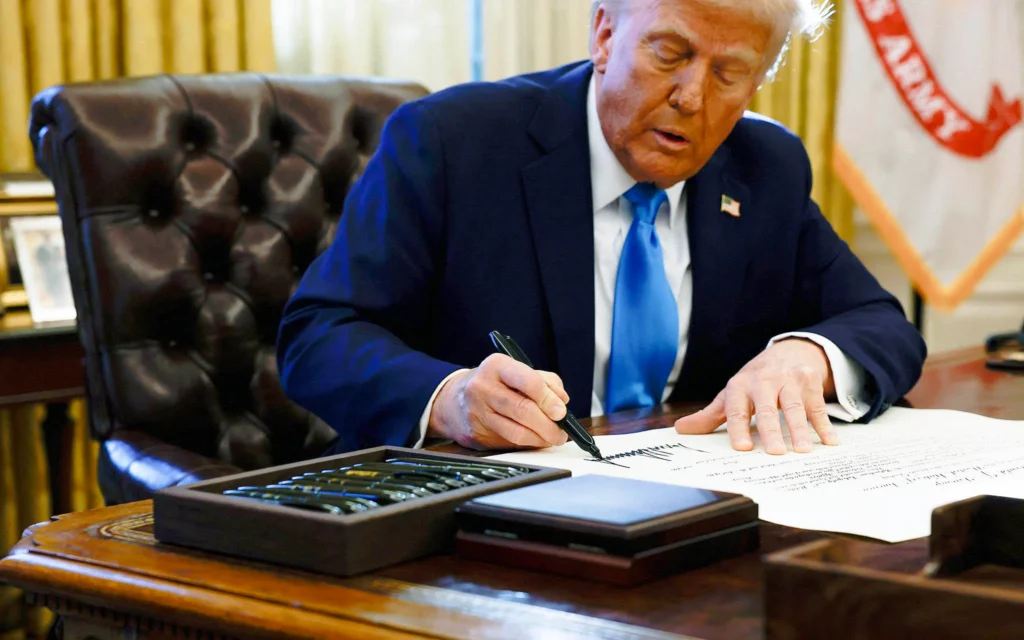
In a significant escalation of economic pressure, former President Donald Trump has signed a new executive order that authorizes the United States to impose tariffs on any country that continues to trade with Iran. The order, unveiled Friday, represents a hardline strategy aimed at fully isolating Iran’s economy and curtailing its nuclear ambitions.
The directive does not immediately enact tariffs nor specify fixed rates, but it explicitly uses 25% as a potential benchmark. This provides the administration with broad discretionary power to penalize trading partners—including major economies—deemed to be conducting significant business with Tehran. Analysts suggest the ambiguity is a deliberate tool to compel allied nations to sever commercial ties with Iran or face punitive trade measures from the U.S.
Trump did not comment directly on the order’s details but reiterated a core foreign policy objective from aboard Air Force One on Friday night, stating firmly there must be “no nuclear weapons for Iran.” This reaffirmation underscores the administration’s view of the order as a critical component of its “maximum pressure” campaign, designed to force Iran into complete compliance with non-proliferation demands.
The timing of the order is particularly notable, as it coincides with ongoing, indirect talks between senior U.S. and Iranian officials in Oman. These discussions, which follow weeks of heightened threats and military posturing from both sides, indicate a volatile dual-track approach: combining diplomatic channels with aggressive economic coercion. The new tariff threat appears intended to strengthen the U.S. negotiating position by demonstrating a willingness to target third countries that might undermine sanctions enforcement.
The move has immediate implications for global trade dynamics, potentially placing allies in Europe and Asia in a difficult position as they balance international nuclear diplomacy with their economic interests. International reaction has been cautious, with several partners historically critical of unilateral U.S. sanctions. The order signals a definitive return to a confrontational stance on Iran, setting the stage for increased geopolitical and economic friction in the coming months.