
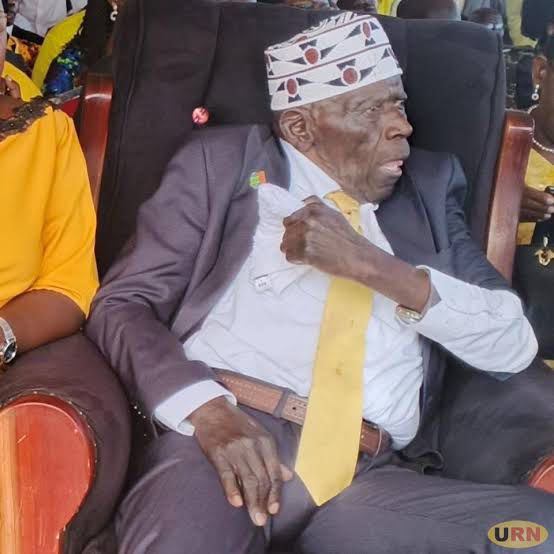
In a result underscoring the political weight of enduring incumbency, Uganda’s First Deputy Prime Minister, Gen. Moses Ali, has been re-elected as Member of Parliament for Adjumani East Constituency. The 86-year-old veteran politician and retired military officer fended off a spirited challenge to secure a new term, a victory that has reignited conversations on age, experience, and legacy in Ugandan politics.
Running on the ticket of President Yoweri Museveni’s National Resistance Movement (NRM), Gen. Ali polled 12,854 votes, according to the District Electoral Commission registrar, Christine Acai. His closest rival, Patrick Tandrupasi of the Forum for Democratic Change (FDC), garnered 11,770 votes. The race was decisively in favour of the two frontrunners, with independent candidate Gasper Draga receiving 522 votes and Stephen Lyo of the National Unity Platform (NUP) trailing with 293.
The election campaign was not without controversy. Activists had previously challenged Gen. Ali’s candidacy in court, citing concerns over his age and health. However, the legal bid was unsuccessful, clearing the path for his campaign, which focused squarely on the promise of completing key development projects.
“The people have spoken. They have chosen experience and a proven track record,” a representative from the General’s campaign team stated. “His focus has always been on delivering tangible results for Adjumani.”
In his rallies, Gen. Ali, who has represented the northern district since 2011, highlighted his commitment to finishing major infrastructure works. Central to his pledges were the construction of a vital Nile bridge at Laropi, the upgrading of critical roads, and the improvement of healthcare services, water access, and electricity supply in the constituency.
His victory highlights a recurring theme in Ugandan politics: the electoral strength of long-serving figures who leverage established networks and the power of incumbency. For many voters, the promise of seeing long-awaited projects to completion by a high-profile figure with direct access to the central government outweighed other considerations.
“He is a minister in the capital. He can bring our issues directly to the President’s table,” said one resident, explaining the choice. “We need that connection for our development.”
Opposition supporters, however, viewed the narrow margin as a sign of shifting tides. “The gap is closing. People are yearning for change, and next time, the result will be different,” a supporter of the FDC candidate commented.
As Gen. Moses Ali prepares to return to Parliament, his re-election solidifies his status as a political stalwart. The outcome in Adjumani reaffirms that in the complex calculus of Ugandan elections, the appeal of entrenched influence and the promise of delivering national resources to the local level remain powerful forces, capable of extending political careers well into advanced age.