

The race to succeed António Guterres as the next UN secretary general is taking shape, with four official candidates and a more transparent selection process than in years past. Guterres’s second term ends on December 31, and his successor will assume office on January 1 next year.
At the heart of the selection is Article 97 of the UN Charter, which states that the secretary general is appointed by the General Assembly upon the recommendation of the Security Council. However, recent reforms have opened up what was once a largely opaque process, guided by principles of transparency and inclusivity.
The formal process began on November 25 last year, when the presidents of the General Assembly and Security Council issued a joint letter inviting nominations. Candidates must be nominated by at least one member state and submit a vision statement, curriculum vitae, and campaign financing disclosures.
A key innovation is the use of public “interactive dialogues,” where candidates present their vision and answer questions from member states. These sessions are webcast live, offering rare public insight into the contenders. On April 21 and 22, the current candidates are scheduled to participate in such dialogues.
As of April, four candidates have officially entered the race: Michelle Bachelet of Chile, a former president and UN human rights chief; Rafael Grossi of Argentina, head of the International Atomic Energy Agency; Rebeca Grynspan of Costa Rica, who leads the UN Conference on Trade and Development; and Macky Sall of Senegal, a former president. Additional candidates could still emerge, as there is no time limit for nominations.
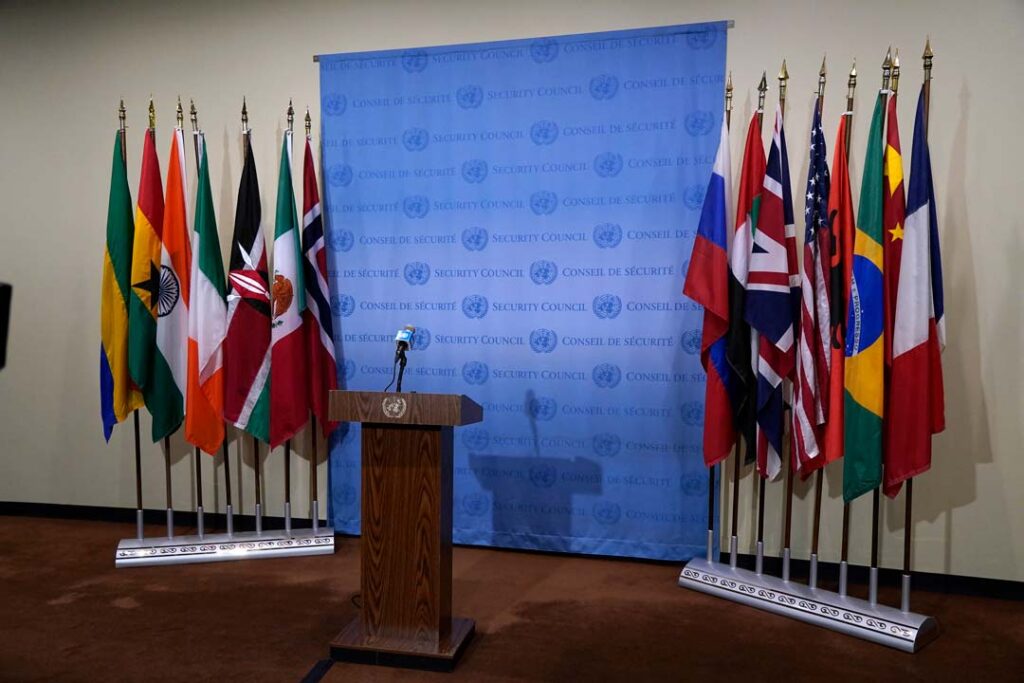
After the dialogues, attention shifts to the Security Council, where real power dynamics play out. The Council conducts informal “straw polls” to gauge support, with the five permanent members—China, France, Russia, the UK, and the US—holding veto power. Candidates who fail to gain traction typically withdraw, narrowing the field to a consensus choice. The Security Council then makes a final recommendation, and the General Assembly formally appoints the secretary general, usually by acclamation.
While the 2016 race that elevated Guterres featured 13 candidates and strong advocacy for a female secretary general, the 2026 contest has so far drawn only four. The outcome will ultimately hinge on complex geopolitical calculations within the Security Council, balancing regional representation, political acceptability, and leadership credentials.


