

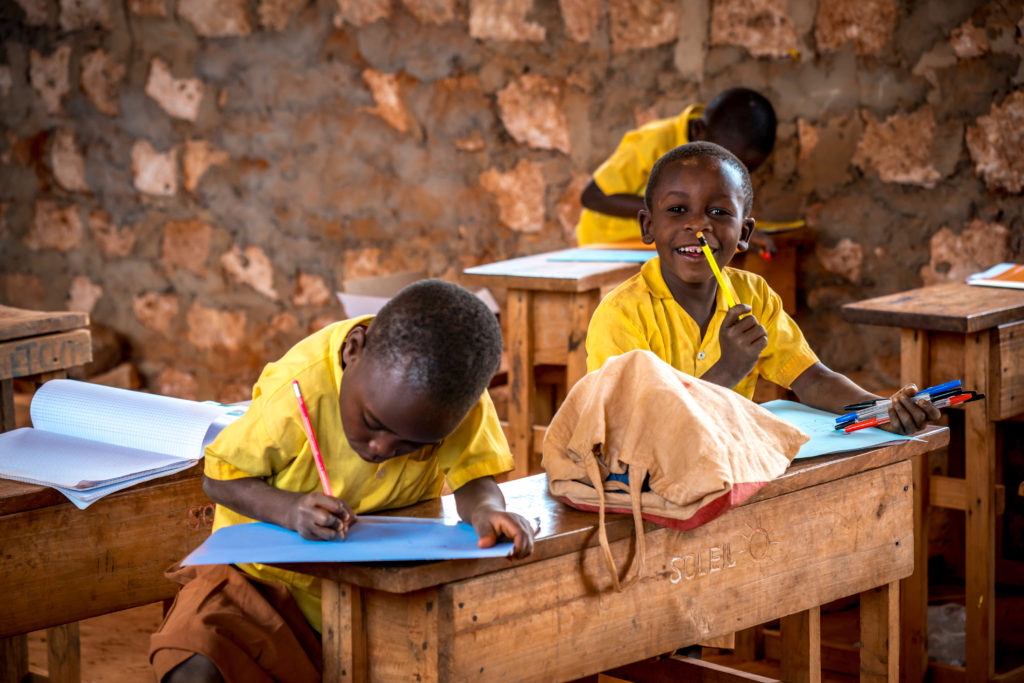
Kenya’s commitment to free primary education has long been viewed as a significant achievement in social progress. However, this policy masks a troubling reality: families are increasingly funding the survival of public schools.
The Usawa Agenda report 2026 highlights the financial burden on households, showing that “free education” often comes with hidden costs. One concerning statistic reveals that 40% of children drop out due to financial constraints. This finding challenges the belief that financial barriers have been eradicated; rather, they have transformed.
These findings emerge as President William Ruto defends his administration’s education reforms amid criticism regarding funding shortages and operational challenges faced by schools and universities nationwide. During Maseno School’s 120th anniversary on May 9, 2026, Ruto dismissed claims of a crisis in the education sector, emphasizing the progress made under his government. He urged Kenyans to overlook negative narratives, stating, “There was no crisis when we had a shortage of 100,000 teachers. Now that we have hired them, there is a crisis.”
Despite government reforms, concerns about the sector’s sustainability persist as enrollment increases while funding remains limited. Secondary school enrollment has stayed high during the transition from the 8:4:4 system, with approximately 3.34 million students in Forms 2, 3, and 4 in 2025. Education stakeholders worry that resources have not kept pace with the growing student population.
Universities are also experiencing significant financial pressure, with projections indicating a Ksh260 billion funding shortfall for the 2026/2027 financial year. As of January 2026, at least 23 public universities face insolvency risks due to pending bills totaling Ksh85.28 billion, jeopardizing their ability to cover operational costs, staff salaries, and legal obligations.
The introduction of the student-centered Variable Scholarship and Loan Funding (VSLF) model in 2023 aimed to enhance equity and efficiency in university financing. However, the transition from block grants to individualized funding has drawn criticism. Stakeholders argue that the Means Testing Instrument (MTI) used to evaluate students’ financial needs is flawed, potentially excluding deserving yet vulnerable learners. Even those who qualify often receive insufficient support, forcing households to manage high costs, including accommodation, food, and transport, amid rising living expenses.
The funding structure in schools reveals the extent of parental involvement in maintaining basic operations. In many instances, parents effectively subsidize teacher salaries through Boards of Management (BOMs): 67% of the funds allocated to BOM teachers come from parents. This indicates that the state does not fully cover teacher-related costs, placing additional financial pressure on families, particularly in rural areas, where 70% of funding for BOM teachers originates from parents.
Meanwhile, government capitation plays a minor role, contributing only 6.7% of funds for BOM teachers. This disparity illustrates a fragmented financing system where state support falls short of meeting operational needs, forcing schools to depend on community contributions, levies, and informal payments.
For many families, these costs are unpredictable and challenging to manage. They encompass contributions for teacher salaries, school maintenance, exams, and infrastructure needs, leading to financial fatigue over time and prompting some parents to withdraw their children from school.
The outcome is a subtle yet persistent inequality; while policies promise universal access, the reality is conditional access, dependent on a household’s capacity to bear hidden costs.