
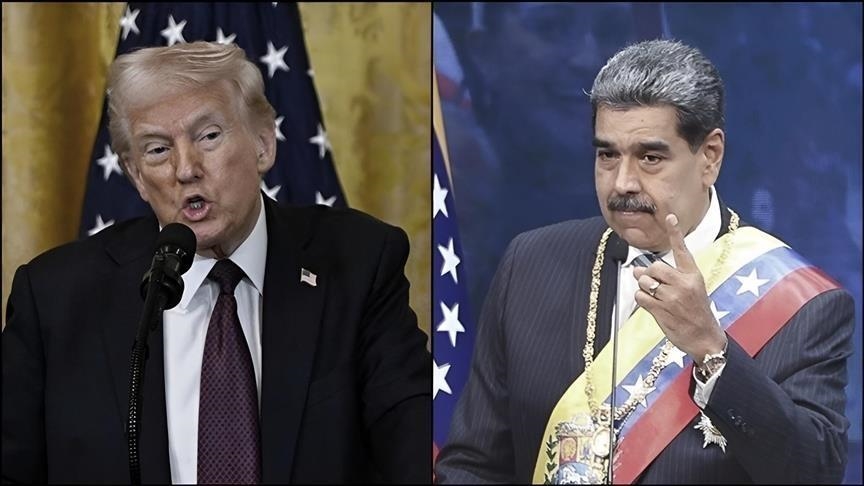
In a stunning declaration that has sent shockwaves across the globe, former U.S. President Donald Trump has announced that the United States military has captured Venezuelan President Nicolás Maduro and his wife, First Lady Cilia Flores.
The announcement, made via Trump’s Truth Social platform, claims that a “large scale strike” was conducted against Venezuela, resulting in Maduro being “captured and flown out of the Country.” Trump stated the operation was done with U.S. law enforcement and promised further details at a news conference scheduled for 11 A.M. at his Mar-a-Lago estate in Florida.
Operation Details Emerge
U.S. officials, speaking to CBS News, have identified the unit responsible as Delta Force, the U.S. Army’s elite counter-terrorism unit. If verified, this operation represents an extraordinary and unprecedented direct intervention into a sovereign Latin American nation to extract its sitting head of state, surpassing even the 1989 capture of Panamanian leader Manuel Noriega.
The U.S. has long accused Maduro of leading a criminal narco-terfficking organization, charges he vehemently denies. A $50 million reward for information leading to his arrest had been offered by the U.S. State Department.
Venezuela in Crisis: Government Reacts
From Caracas, the situation remains chaotic and defiant. Venezuela’s Defence Minister, Vladimir Padrino López, announced the immediate deployment of all military forces across the country, calling for united resistance against what he termed “the worst aggression” Venezuela has ever faced. He insisted the armed forces were acting on “Maduro’s orders,” despite the president’s absence.
Vice President Delcy Rodríguez stated that the government does not know the whereabouts of Maduro or Flores and has demanded “immediate proof of life” from the United States.
Political Fallout and Uncertain Future
The potential removal of Maduro marks a seismic shift in Venezuelan and regional politics. U.S. Secretary of State Marco Rubio, according to Republican Senator Mike Lee, anticipates no further military action now that Maduro is reportedly in U.S. custody. Lee confirmed that Maduro is expected to stand trial on criminal charges in the United States.
Supporters of the intervention hope it will pave the way for Venezuela’s opposition, led by figures like María Corina Machado, to assume power. However, analysts warn of severe instability. Maduro retained the loyalty of significant military and paramilitary forces, and his forcible removal could trigger violent unrest and a protracted power struggle. Other members of Maduro’s government are likely fearing for their own futures.
Historical Parallels and Unanswered Questions
The operation draws direct, yet escalated, parallels to the 1989 U.S. invasion of Panama to capture Manuel Noriega. Both leaders were accused by the U.S. of drug trafficking and had claimed victory in disputed elections. However, Noriega’s capture followed a declared war and conventional military invasion, whereas details of the Maduro operation suggest a covert, high-stakes extraction without widespread ground combat.
Major questions remain unanswered: Where are Maduro and his wife being held? What is the legal justification cited by the U.S.? How will Venezuela’s institutions and people respond in the coming hours and days? The world now awaits the promised U.S. news conference for further clarity on an event that has redrawn the boundaries of international intervention.