
Edwin Sifuna’s emerging political movement, Linda Mwananchi, now faces a significant challenge as the 2027 presidential race heats up. Siaya Governor James Orengo has declared his intention to run for president, presenting a formidable challenge to Sifuna’s increasingly visible campaign.
While Orengo’s announcement has not caused a split within the movement, it has revealed underlying ambitions at a crucial time. Linda Mwananchi is still defining its political strategy and determining how to select its presidential candidate for the upcoming General Election.
Orengo acknowledged that his declaration has caused some unease among movement members, noting that the question of a presidential candidate was previously discussed in a meeting in Limuru, Kiambu County. He emphasized the need for further consultation before making any decisions, stating, “The issue of a presidential candidate was brought as an agenda, but I said it was inappropriate at that time and that it needed more consultation. Some people were unhappy about that,” during an interview with a local TV station.
At a burial ceremony in Homa Bay County, Orengo confidently proclaimed, “From today, know that I am the presidential candidate. A serious presidential candidate.” This declaration complicates the political landscape, as Sifuna has emerged as the leading figure within Linda Mwananchi and has garnered public support from key movement figures.
Sifuna now faces the dual challenge of not only building a national political movement around his presidential aspirations but also creating a framework that accommodates the ambitions of senior leaders without allowing competition to undermine the organization before the 2027 campaign fully develops.
Several leaders within Linda Mwananchi have publicly endorsed Sifuna. Kabuchai MP Majimbo Kalasinga cautioned against allowing competing ambitions to create uncertainty regarding the movement’s presidential ticket, stating, “From today, we don’t want any confusion. Our presidential candidate remains Edwin Sifuna,” at a Linda Mwananchi event.
Embakasi East MP Babu Owino has also expressed his support, firmly stating, “I’m with you 100 percent,” in reference to Sifuna. These endorsements contrast with Orengo’s stance that the movement should allow competition before finalizing its candidate.
Orengo has referenced Kenya’s political history to justify his position, recalling the 2007 ODM Pentagon, where multiple senior politicians had presidential ambitions before the opposition ultimately chose a candidate. He argued that competing ambitions should not be viewed as a threat to unity.
Linda Mwananchi leaders have actively worked to prevent the emerging competition from escalating into open conflict. Vihiga Senator Godfrey Osotsi dismissed concerns that Orengo’s declaration indicated a serious divide, asserting that the governor has the constitutional right to pursue the presidency. He stated, “I don’t think it is an issue; it is not bad for anyone to declare interest for any seat,” highlighting Orengo’s importance within the movement.
Osotsi emphasized that the movement would eventually establish a consensus that accommodates all ambitions, stating, “We will come up with a formula that would accommodate everybody.” He also urged caution in interpreting individual statements from members as the official position of Linda Mwananchi, asserting, “Anyone who has made a statement, that is not the collective position of Linda Mwananchi. We want to be as accommodating as possible.”
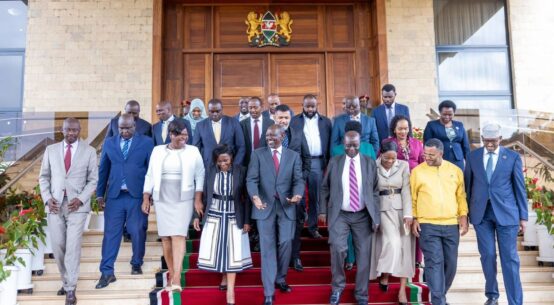
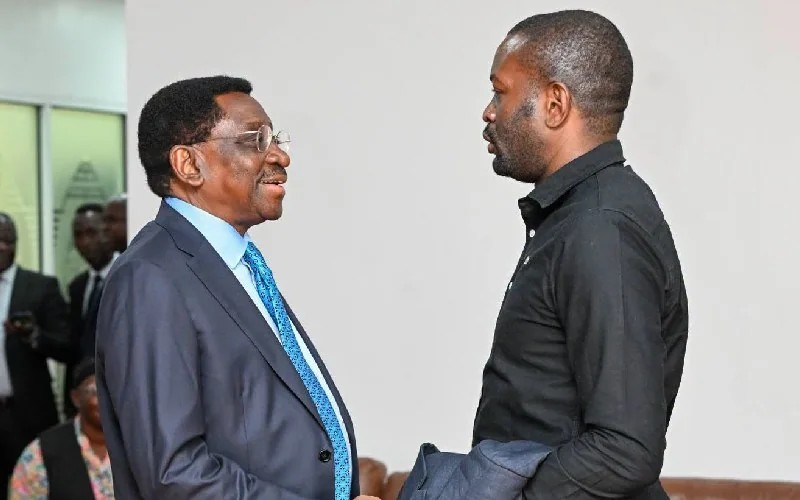
This approach is vital as the movement aims to maintain unity while attracting more leaders and supporters ahead of the election. Recently, the leaders demonstrated their commitment to collaboration by meeting in Nairobi, where Sifuna, Orengo, and Babu Owino publicly showcased their unity just days before a planned Linda Mwananchi rally.
Amidst these developments, the unresolved issue of Linda Mwananchi’s political identity adds another layer of complexity. The movement initially sought to reserve the name Linda Mwananchi, but a dispute with the Registrar of Political Parties has escalated to the Political Parties Disputes Tribunal. On August 25, 2026, the tribunal permitted Sifuna’s faction to reserve the name “The Mwananchi Party” while the dispute is ongoing, instructing the Registrar not to process or register “Linda Mwananchi” or similar variations for another entity until the case is resolved. The tribunal is set to revisit the matter on September 14.
Sifuna has emphasized that this legal battle is fundamentally about preserving the movement’s identity, stating, “What we are fighting for is not a party. We have parties. We are fighting for a brand, our name.” With impending electoral and regulatory deadlines, the urgency of resolving both the identity and leadership questions intensifies as they intertwine.
Orengo’s entry into the presidential race complicates Sifuna’s path, as public support for his ambitions does not guarantee an uncontested nomination. Conversely, Orengo’s declaration does not automatically ensure his appearance on the ballot. He frames his candidacy as part of an internal democratic process, while Osotsi and other leaders emphasize the potential for consensus within the movement.
Linda Mwananchi now faces a challenging balancing act. A closed process that simply appoints Sifuna as the candidate risks alienating leaders who believe in a more competitive or negotiated selection. However, an extended contest could drain political energy, foster rival factions, and divert attention from the broader goal of establishing a national opposition coalition.
As Linda Mwananchi seeks to evolve from rallies and mobilization into a credible national political force ahead of the 2027 election, the stakes are particularly high. For Sifuna, Orengo’s presidential bid signifies more than a challenge from a rival; it tests whether he can cultivate an organization that effectively navigates powerful personalities, competing ambitions, and complex negotiations while preserving the unity that has fueled his campaign.
The immediate concern is not whether Orengo has the right to run—Osotsi has already affirmed that he does—but rather whether Linda Mwananchi can implement a credible process for determining who will carry its presidential aspirations into the 2027 election. The manner in which Sifuna and his allies address this critical question could ultimately shape Linda Mwananchi’s future, determining whether it emerges as a formidable opposition force or falters under the weight of competing ambitions before the voters head to the polls.