

France has decided against establishing a permanent military base in Kenya while simultaneously strengthening defense ties with Nairobi and redefining its security role in Africa. Outgoing French Ambassador Arnaud Suquet emphasized that France is intentionally shifting away from the traditional model of permanent military deployments that has characterized its involvement in various African nations. Instead, the focus will be on creating flexible partnerships that cater to the specific needs of individual countries.
“We aim to avoid merely filling a void. Our objective is not to recreate past military or security partnerships. We seek a new framework,” Suquet articulated in an interview.
He added, “This does not imply a lack of interest in security and scientific collaboration.”
Ambassador Suquet is transitioning to a new role as the director for Africa and the Indian Ocean. His statements reflect Paris’ evolving security strategy in Africa, particularly following the signing of a Defence Cooperation Agreement with Kenya in October 2025.
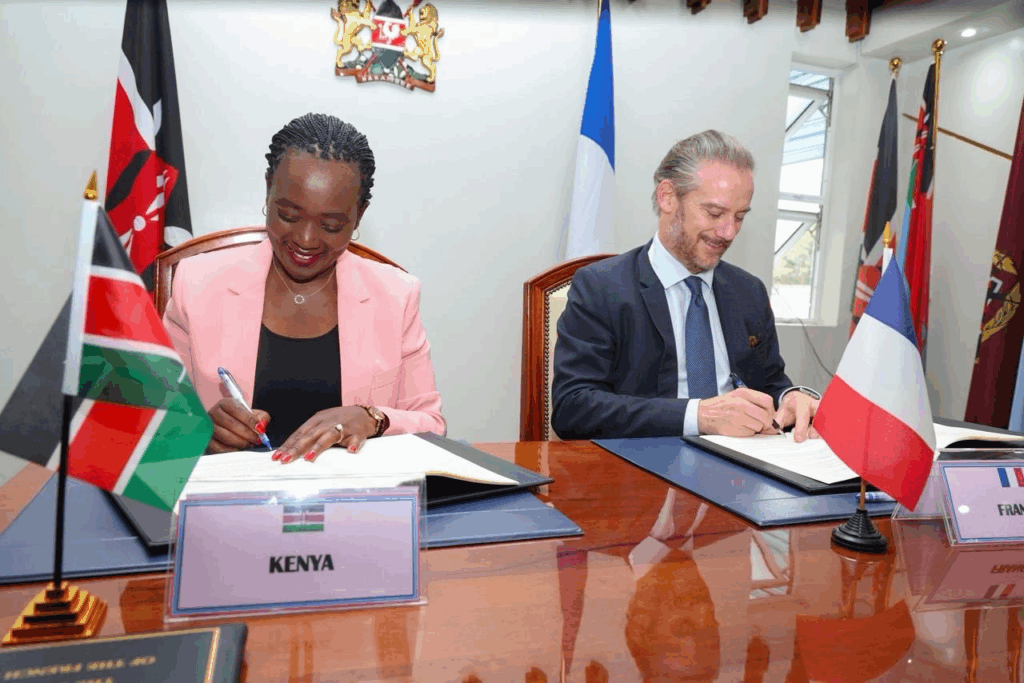
This agreement establishes a foundation for collaboration in areas such as intelligence sharing, maritime security, peacekeeping, training, and humanitarian assistance, as outlined by Kenya’s Ministry of Defence. The agreement was formally signed by Defence Cabinet Secretary Soipan Tuya and Ambassador Suquet at the Defence Headquarters in Nairobi.
Suquet clarified that this agreement should not be misinterpreted as France’s intention to create a new military presence in Kenya or to supplant other Western security partners. “We are not here to establish a permanent base or military presence,” he asserted.
He further noted that France has already diminished its military footprint across the continent, having closed nearly all of its permanent military bases, with Djibouti remaining as its primary base in Africa.
This strategic shift comes at a time when France is actively working to rebuild relationships throughout Africa, particularly in West Africa, following the withdrawal of French forces from several countries in the region.
Paris is increasingly aiming to portray its engagement with African nations as a partnership of equals, moving away from the military and political frameworks associated with its colonial past.
Following the Africa Forward Summit held in Nairobi, Kenya represents a crucial test of this new approach. Unlike France’s traditional partners in Francophone West Africa, Kenya does not share a colonial history with Paris and has established extensive security partnerships with various other nations.
The Africa Forward Summit in May served to enhance relations with English-speaking African states, as President Emmanuel Macron sought to promote what Paris describes as a new partnership with Africa.
Kenya’s strategic location adds significant value to this initiative.
The agreement with France also coincides with Kenya’s efforts to diversify its defense relationships. Nairobi has entered into defense cooperation arrangements with countries such as the UK, the US, Turkey, Ethiopia, and several other European and Asian partners.
Suquet expressed that France does not aspire to be Kenya’s exclusive or primary security partner. Instead, he highlighted that cooperation would center on areas of mutual interest, particularly maritime security and information sharing, driven by geographical factors.
France maintains territories and strategic interests in the western Indian Ocean, including Mayotte, while Kenya holds a vital position along the East African coast.
“We face common security challenges related to maritime security,” Suquet noted, emphasizing the importance of sharing maritime information.
The security of the Indian Ocean has gained heightened significance due to disruptions in the Red Sea and the broader Middle East, which have jeopardized shipping and exposed vulnerabilities in critical international sea routes.
Kenya has increasingly positioned its navy and security institutions as key players in safeguarding the Western Indian Ocean against threats such as piracy, maritime terrorism, trafficking, illegal fishing, and attacks on shipping.
Thus, the Defence Cooperation Agreement provides a formal framework for collaboration in this strategically important area.
According to Kenya’s Defence Ministry, the agreement aims to strengthen bilateral defense relations and enhance cooperation in maritime security and regional stability.
This agreement emerges against the backdrop of Kenya’s broader expansion in defense diplomacy, as Nairobi seeks partnerships not only with traditional Western allies but also with nations like Japan, Italy, and the Czech Republic, with a growing focus on maritime security, intelligence sharing, military training, and defense technology.
Ambassador Suquet suggested that the French model will prioritize mobility over a permanent presence. “We have significantly reduced our footprint on the continent, closing nearly all our permanent military bases.”
He concluded that the new approach will not involve a static military presence; instead, it will allow France to collaborate with partner countries according to their unique needs. “The model is not about establishing a static, permanent military presence. It is more flexible, yet deeply engaged with the needs of the country,” he affirmed.


