

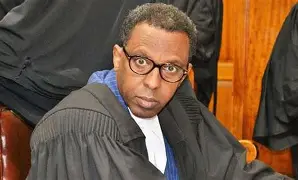
Prominent lawyer Ahmednasir Abdullahi has suggested that former deputy president Rigathi Gachagua’s sharp criticism of Northern Kenya leaders could significantly alter the region’s political landscape ahead of the 2027 General Election. According to Ahmednasir, the remarks, though controversial, may resonate deeply with voters frustrated by years of underdevelopment despite heavy public funding.
Writing on X on Monday, January 12, the outspoken senior counsel argued that Gachagua’s comments touched on a long-standing concern among residents of Northern Kenya. He noted that despite billions of shillings channelled to the region through devolution funds and the Constituency Development Fund (CDF), poverty levels remain alarmingly high. Ahmednasir said this reality has left many locals questioning the accountability of their leaders.
The lawyer asserted that by shifting the focus from national government neglect to local leadership failures, Gachagua had “hit a raw nerve.” He argued that many voters quietly share the view that some leaders have failed to prioritise development, instead allegedly diverting public resources for personal gain. This, he said, explains why the former deputy president’s remarks could earn him unexpected goodwill in the region.
Ahmednasir further suggested that if Gachagua, now associated with the Democracy for the Citizens Party (DCP), maintains this line of messaging, Northern Kenya voters could begin viewing him as an ally rather than an outsider. He went as far as predicting that Gachagua could be welcomed into key political conversations within the region as 2027 approaches.
Gachagua’s comments sparked debate after he accused Northern Kenya leaders of misusing massive allocations from devolution, equalisation funds and CDF, claiming the region had received over KSh 1 trillion with little to show for it. He alleged that some leaders invested heavily in Nairobi while neglecting schools, hospitals and roads back home.
Northern leaders, led by MP Farah Maalim, strongly rejected the accusations. They defended affirmative action policies, citing historical marginalisation, insecurity, teacher shortages and cultural challenges as barriers that continue to hinder development and education outcomes in the region.


