

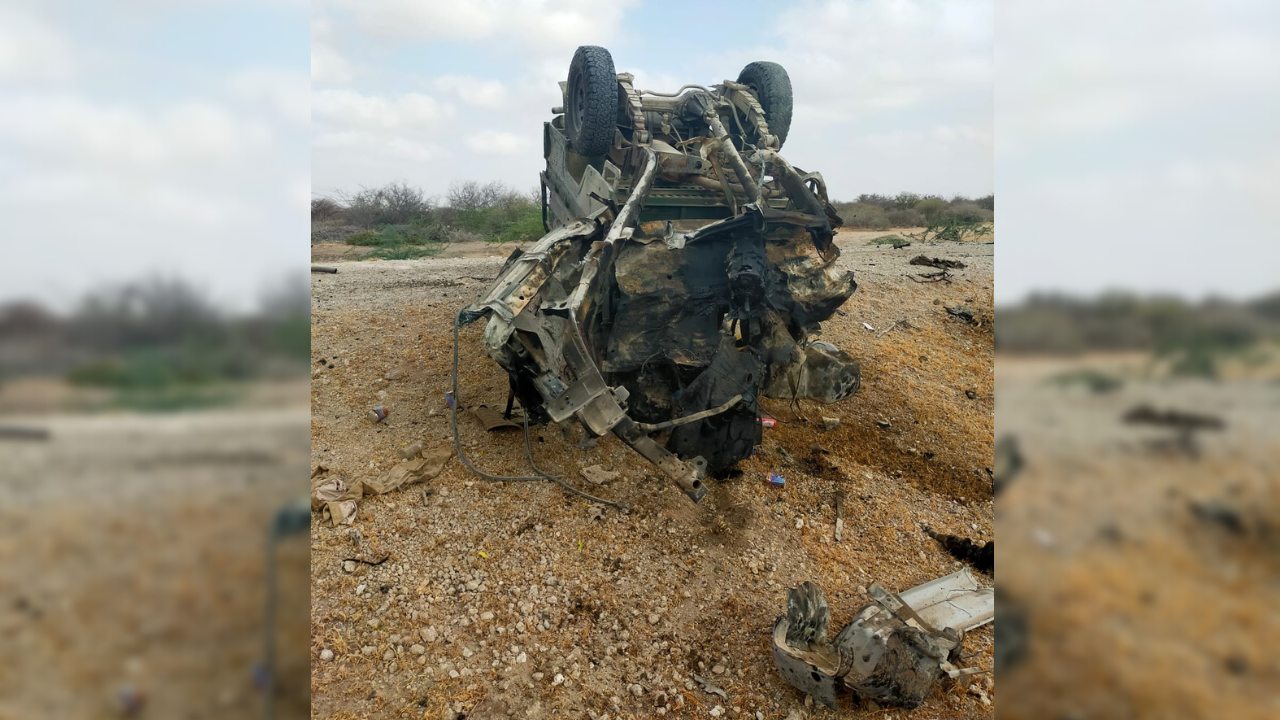
Two police officers were killed and five others injured on Wednesday when their patrol vehicle struck an Improvised Explosive Device (IED) in Garissa County. The attack, attributed to the Somali-based militant group Al-Shabaab, targeted a Border Patrol Unit Land Cruiser as it was patrolling the Liboi-Kulan road, an area known for its porous border with Somalia.
According to police reports, the militants planted the explosive on the road and detonated it as the police vehicle approached. The blast destroyed the Land Cruiser, killing one officer instantly. A second officer later succumbed to their injuries while being treated.
This incident marks a resurgence of violence after a period of relative calm, which authorities attributed to intensified security operations in the region. The attack underscores the persistent threat posed by Al-Shabaab militants, who frequently cross the long and remote Kenya-Somalia border to stage attacks.
The government has recently increased its counter-terrorism efforts, with some success. In October, police from the elite Special Operations Group (SOG) thwarted a plot by eight Al-Shabaab terrorists who were attempting to plant IEDs on the Welmerer-Yumbia road. A swift response, aided by a tip-off from the local community, allowed officers to engage the militants, recover the assembled explosives, and destroy them, though the attackers managed to escape.
This latest tragedy is part of a broader pattern of violence in Kenya’s northeastern counties. Just last month, on October 22, a police officer was shot and killed in an ambush by suspected Al-Shabaab gunmen in the neighboring Wajir County.
The ongoing conflict has its roots in regional instability. Kenya first sent its troops into Somalia in 2011 under “Operation Linda Nchi” to combat the Al-Shabaab threat directly after a series of kidnappings and cross-border incidents. While Kenyan forces have since liberated key areas and disrupted numerous terror plots, the group remains a potent and deadly force along the border.


