

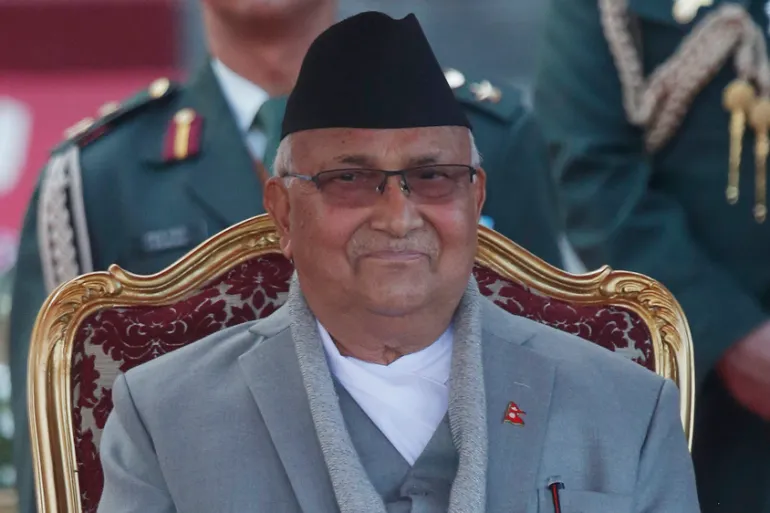
Nepal’s Prime Minister Khadga Prasad Sharma Oli announced his resignation on Tuesday, as nationwide protests led by the younger generation demanded stronger anti-corruption and anti-censorship measures. Oli’s aide confirmed the move to Reuters, signaling fresh political uncertainty for the Himalayan nation.
The resignation comes after violent protests that left at least 19 people dead and more than 100 injured in Kathmandu and several other cities. Demonstrations intensified after police used tear gas and rubber bullets as crowds attempted to storm Parliament despite an indefinite curfew imposed by authorities. The clashes represent the worst unrest the country has seen in decades, a reflection of ongoing instability since the abolition of the monarchy in 2008.
On the eve of his resignation, Khadga Prasad Sharma Oli had convened a meeting with all political parties, urging dialogue as a path forward. “We have to resort to peaceful dialogue to find solutions to any problem,” he said, stressing the need for non-violent resolution. The protests were sparked by the government’s September 4 decision to ban 26 social media platforms for non-compliance with new registration rules. What began as scattered demonstrations quickly escalated into nationwide protests driven by longstanding anger over corruption and economic hardship. Although the ban was lifted on September 8 after the deadly clashes, Home Minister Ramesh Lekhak resigned under mounting pressure.
Despite the curfew, protesters continued to gather outside Parliament and in other parts of Kathmandu on September 9. Nepal, wedged between India and China, now faces a fresh period of political uncertainty as parties scramble to form a new government in the wake of Oli’s abrupt exit.
Oli’s departure marks another chapter in Nepal’s fragile democratic arc. He had previously resigned in July 2016, just an hour before a parliamentary confidence vote he was likely to lose, a move that cleared the way for Prachanda to pursue coalition-building with the Nepali Congress and other parties. Oli reclaimed the premiership in July 2024, underscoring the revolving door of leadership that has characterized Nepali politics since the 2008 monarchy abolition.
Analysts say the Gen Z-led protests reflect a demand for greater accountability and freedom of expression, and they could shape the country’s policy direction in the near term.


