

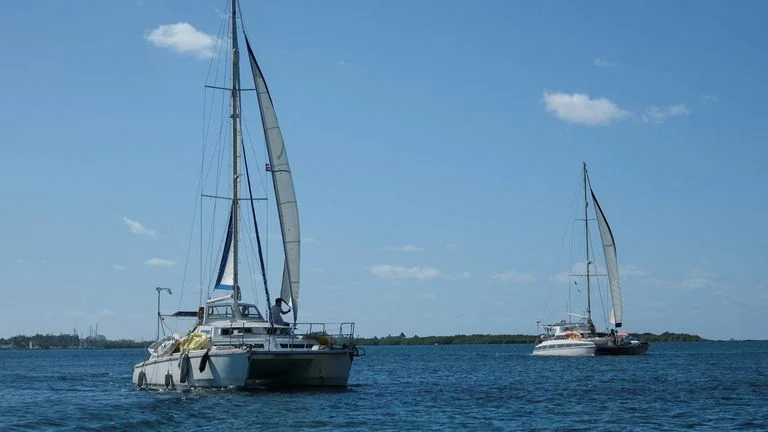
Mexican Navy locates vessels with crew members safe as convoy continues mission to deliver humanitarian supplies to fuel-starved Cuba.
Two boats filled with humanitarian supplies traveling from Mexico to Cuba have been located days after contact with them was lost in the Caribbean, organizers have confirmed, bringing relief to families and supporters who had grown increasingly anxious over the vessels’ fate.
The boats were located by the Mexican Navy, and all crew members are safe, a spokesman for the Nuestra America Convoy said. He did not explain why the two vessels—the Friendship and the Tiger Moth—had disappeared or what circumstances led to the loss of communication during their voyage across the Caribbean Sea.
The Mexican Navy has not commented on how it located the boats or whether any distress signals had been received prior to the vessels going off the radar. The spokesman for the convoy declined to provide further details, citing operational security and the ongoing nature of the mission.
The two vessels are among several that have sought to carry supplies to the island nation since the United States imposed an oil blockade in January, prompting a chronic fuel shortage that has crippled daily life across Cuba. The blockade, implemented by the Trump administration, has tightened existing sanctions and further restricted the flow of fuel and other essential goods to the communist-run country.
The boats departed Isla Mujeres, in Mexico’s easternmost state of Quintana Roo, on March 20 and had been due to arrive at their destination on Monday or Tuesday of this week. Their disappearance sparked concern among humanitarian groups and volunteers who had organized the mission, with fears mounting as days passed without contact.
There are nine crew members on board the two vessels, hailing from Poland, France, Cuba, and the United States. Organizers have confirmed that all crew members are in good health and that the boats sustained no significant damage during the period when they were out of contact.
“The vessels are continuing their journey to Havana,” the Nuestra America Convoy spokesman said, adding that the crews had been resupplied and were pressing ahead with their mission.
“The convoy remains on track to complete its mission—delivering urgently needed humanitarian aid to the Cuban people,” he added.
Volunteers and non-governmental organizations have largely spearheaded efforts to deliver humanitarian aid to Cuba since the oil embargo began. With formal channels of trade and assistance severely restricted by the sanctions, these grassroots initiatives have become a vital lifeline for many Cubans facing acute shortages of fuel, food, and medicine.
The United Nations has warned that Cuba faces “dire” supply shortages, with more than 50,000 surgeries canceled across the country as fuel supply constraints and aging infrastructure have caused multiple nationwide blackouts. Hospitals have been forced to reduce services, and emergency response capabilities have been severely hampered by the lack of reliable electricity and transportation fuel.
Coupled with shortages of food and medicine, the situation has triggered rare public dissent in the form of street protests, with Cubans taking to the streets in several cities to voice frustration over the deteriorating living conditions. The Cuban government has blamed the crisis squarely on the US embargo, while international observers have called for humanitarian exemptions to be expanded to allow essential supplies to reach the population.
The Nuestra America Convoy is one of several solidarity initiatives that have emerged in response to the crisis. Organizers describe their mission as a humanitarian endeavor aimed at circumventing what they characterize as an unjust blockade that disproportionately affects ordinary Cubans. Critics of the US policy have argued that the embargo violates international law and inflicts undue suffering on civilians.
The successful location of the Friendship and Tiger Moth has been met with relief by supporters of the convoy, who had launched appeals for information when the vessels failed to arrive as scheduled. The incident has also highlighted the risks faced by volunteers attempting to deliver aid through informal channels in a region where geopolitical tensions remain high.
As the boats continue their journey toward Havana, organizers have reiterated their commitment to completing the mission, though they acknowledge that the challenges of navigating the Caribbean under current conditions remain significant. The crews are expected to arrive in the coming days, pending favorable weather and sea conditions.
Neither the US government nor Cuban authorities have issued statements regarding the incident or the broader convoy mission. However, the episode has drawn renewed attention to the humanitarian situation in Cuba and the growing reliance on non-state actors to fill gaps left by formal aid mechanisms.